Three different corners of the audio world moved this month: one aimed at helping authors plan their writing more realistically, and two focused on where readers and listeners actually spend their time. Here’s what’s happening.
The Indy Author Podcast: “Book Math”
The Indy Author Podcast released Episode 361, “Book Math: Build a Writing Plan Based on Reality,” with guest Gala Russ, on November 10. The episode focuses on building a writing plan grounded in realistic numbers rather than wishful...
Hachette's imprint Orbit recently pulled the horror novel Shy Girl by Mia Ballard from its planned US and UK release after The New York Times brought AI-generation allegations to the publisher, originating from a mid-2025 Reddit post that flagged repetitive patterns often associated with AI-generated prose: nearly every noun paired with an adjective, actions described through similes, descriptions arriving in threes. Concerns spread across BookTok, Instagram, and YouTube before The Times...
With Halloween just around the corner, here's a list of horror novels that have earned their place as genre staples, the kind of books people keep recommending decades (or centuries) after they were written. Whether you're looking for something atmospheric, something visceral, or something that'll keep you up overthinking your house's floor plan, there's a little of everything here.
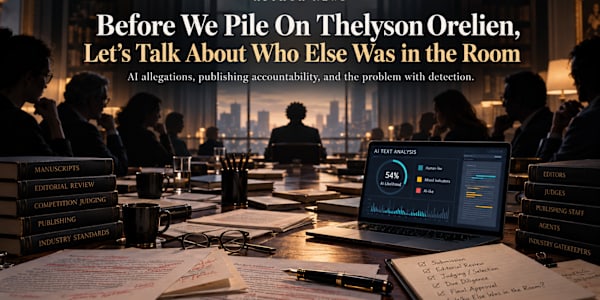
By now, you've probably seen the headlines. Thelyson Orelien, a Haitian-Canadian novelist, had his breakthrough debut, a French-language migration story called C'était ça ou mourir ("It Was Either That Or Die"), pulled from the shortlist for France's Goncourt Prize after an AI detector flagged an excerpt as 100% likely to be computer-generated. Publishers had already arranged translations into more than 20 countries. On October 13, Orelien gave his first detailed response: he denies using AI...
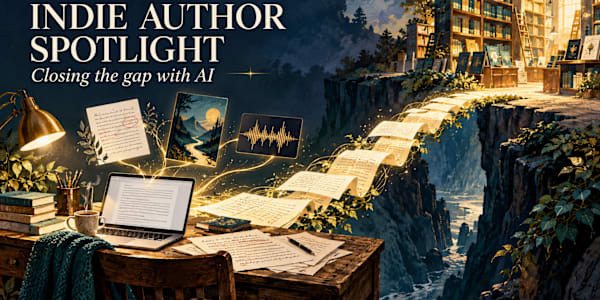
AI in publishing tends to get discussed as a threat, to quality, to jobs, to the slush pile. Less discussed is what it's actually doing for the author at the opposite end of the budget spectrum from a traditionally published bestseller. Here's a look at the real numbers behind that gap, and where AI tools are showing up to narrow it.
The Gap, in Dollars
Traditional publishing advances vary enormously by author profile. Debut authors typically see $5,000-$15,000. Established authors land...
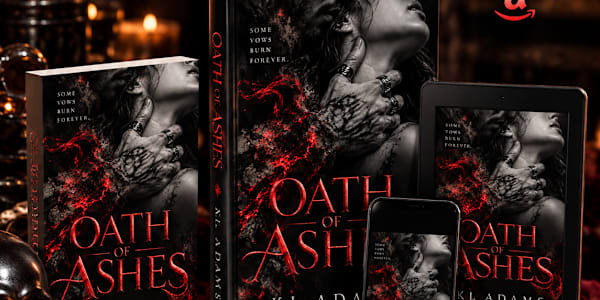
Some vows burn forever. Discover a psychological dark romance filled with dangerous attraction, family secrets, and morally gray characters.
The wait is over. Oath of Ashes is officially available on Amazon!
There's something about a love story that refuses to play by the rules.
A story where attraction feels dangerous, trust doesn't come easily, and the man who captures your attention might be the very person you should avoid.
That's the world of Oath of Ashes, my newest adult psychological...
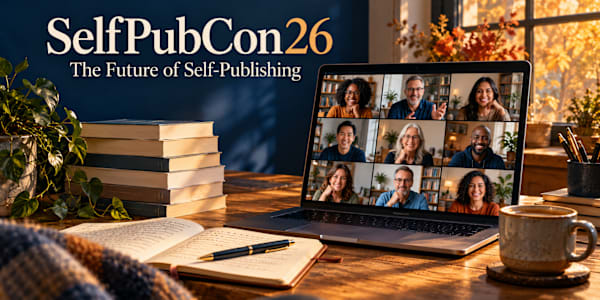
On October 17 and 18, the Alliance of Independent Authors (ALLi) hosts SelfPubCon26, its annual Self-Publishing Advice Conference. It’s online, free to register for, and built around a single question: where is indie publishing heading, and what’s working right now? Here’s a plain breakdown of what’s planned, who’s speaking, and how the weekend is structured.
The Basics
Theme: “The Future of Self-Publishing: What’s Working Now & What’s Next.”
Dates: The conference weekend is October 17-18. A...
For most of the last decade, "self-published" has meant "sold through Amazon." That's shifting. A growing number of indie authors are building a second, parallel sales channel: their own storefront, selling directly to readers without a retailer in between. Here's what that actually looks like: the numbers behind the trend, and why it's working for the authors it's working for.
What "Direct Sales" Actually Means
Direct-to-consumer, or direct-to-reader, selling means an author sells books...
Fake agents. Real publisher names. More than $164,000 lost before the truth came out.
It's different hearing "watch out for publishing scams" as a general alert. The real impact becomes clear when you read the documented cases by the Authors Guild of how it affects real people. Two cases are worth sitting with, not because they're rare, but because of exactly how far each one went before the author realized what was happening.
"Indie author" used to describe a method. You self-published, full stop, rather than going the traditional route through an agent and a publishing house. That definition is loosening. A growing thread in indie publishing coverage right now points to something different: authors who move between publishing methods project by project, rather than committing to one lane for an entire career. What "Hybrid" Actually Looks Like
The shape of it varies from author to author, but a few patterns recur....
Direct-to-reader sales have been a growing trend in indie publishing for a while now, but the setup has always come with a real cost: building a website, integrating an e-commerce platform, handling payment processors, shipping, and sales tax. On August 18, Lulu introduced its new Direct Buy Button to address that friction point head-on.
What It Actually Does
The Direct Buy Button is a checkout link or embeddable button an author can create for any print book published through Lulu, with no...
Every self-published author eventually hits the same fork in the road: stay exclusive to Amazon through KDP Select, or go wide and put your ebook everywhere else too. It comes up constantly in author groups, and, like the McFadden advice debate, the discourse tends to split into camps, each convinced the other is wrong. They're not, really. Here's what each path actually gives you, and what it costs. What KDP Select Actually Is
KDP Select means your ebook is exclusive to Amazon, in 90-day...
A video made the rounds recently with a pretty direct title: "I'm an Editor. Please Don't Take Freida McFadden's Writing Advice." It's a pushback on McFadden's now-famous stance, the one she's repeated in interviews and on her own website: stop procrastinating, just write the book, put it out there, and fix what needs fixing later. An editor's perspective on that advice is worth hearing, especially from someone who's worked inside traditional publishing and seen what a polished, agent-ready...
The conversation around AI and publishing has been loud, and much of it has centered on fear, flooded marketplaces, disclosure fights, and bans on award eligibility. But a quieter, more measured narrative has been building beneath all that noise, and it's worth paying attention to: for many indie authors, AI isn't being used to write books at all. It's being used to run the business around the books.
The Shift in the Conversation
Writer and developmental editor Diane Callahan, of the Quotidian...
Walk into any online book community, and you'll notice it: readers picking up a beloved decades-old classic and bouncing off it hard, while a book published six months ago gets devoured in a weekend. It's not that older books are worse; plenty of them are genuinely brilliant, but something about how books are written and read has shifted enough that the reading experience itself feels different. Here's a look at what's actually changed. Pacing Has Fundamentally Sped Up
There's a reason morally gray main characters keep dominating the bestseller lists for dark romance, fantasy, and thrillers. Readers aren't just tolerating them; they're actively seeking them out, sometimes over the clearly "good" alternative. Here's a look at what's actually going on when a reader falls for a character who probably shouldn't be fallen for.
They Feel More Real
Purely good characters are aspirational. Morally gray characters are recognizable. Most people don't experience...
Okay. I need to talk about Lights Out because I finished it, and I have been thinking about Josh and Aly ever since, in a way that is probably not entirely healthy, but here we are.
If you haven't read this one yet, Lights Out follows Aly, a trauma nurse who has a very specific, very private fascination with masked men online. Then one night, one of those masked men breaks into her house. What follows is dark, tense, occasionally unhinged, and somehow also laugh-out-loud funny, which should...
Publishing has traditionally offered authors two well-worn paths: land a traditional deal or self-publish. In the last few years, a third option has grown into something authors at every level, from brand-new indie writers to genuinely massive bestselling names, are using deliberately: crowdfunding the book directly through Kickstarter. Here's what that route actually looks like, and how it differs from the other two.
The Traditional Route
A traditional deal means an advance from a publisher in...
A recent episode of The Indy Author Podcast tackled a topic that eventually touches almost every indie author: what happens to a book after its launch window closes. Host Matty Dalrymple sat down with Jeff Elkins, author of thirteen novels and founder of The Dialogue Doctor, to talk through what it looks like to give older, lightly-marketed titles a second life.
The Assumption Being Questioned
A lot of indie publishing advice over the past decade has rested on a few core assumptions: that...